






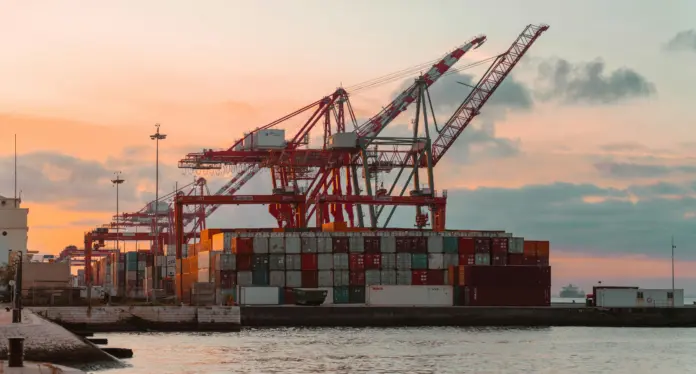
In 2025, Polish container ports achieved historic results, confirming Poland’s growing role as a key logistics hub in Central and Eastern Europe. Record-breaking cargo volumes, multi-billion infrastructure investments, and ambitious maritime projects are making the port sector one of the most promising areas for foreign investors interested in long-term development in Poland.
For companies operating in logistics, international trade, energy, or industry, Polish container ports are no longer merely transport back facilities – they are becoming a strategic source of competitive advantage.
A record-breaking year 2025 for Polish container ports
The year 2025 went down in history as the best year ever for Polish container ports. Nearly 3.8 million TEU were handled nationwide, marking the highest result in the history of Poland’s maritime economy.
This represents an 18% year-on-year increase, confirming the dynamic growth of maritime trade and the resilience of Polish logistics amid global disruptions.
Of particular importance was the crossing of the symbolic 100,000 TEU threshold in the Port of Szczecin, something that only a few years ago seemed beyond reach. The entire Szczecin–Świnoujście port complex closed the year with total cargo handling of 34.79 million tonnes, recording a 7.5% increase compared to the previous year.
Growth structure – what is driving Polish container ports
From an investor’s perspective, the structure of cargo growth is crucial.
Polish container ports recorded significant increases in the most promising segments:
- Containers – growth of up to 44%
- LNG and fuels – growth of over 30%
- General cargo and ferry traffic
- High value-added bulk cargo
Declines were mainly observed in traditional commodities such as coal and grain. From a long-term perspective, this should be seen as a structural transformation of ports toward a modern economy, container logistics, and the energy sector.
Public investments – strong state support for ports
One of the most important signals for foreign investors is stable infrastructure support. Nearly PLN 3 billion from the state budget has been allocated to the development of Poland’s maritime economy, with a significant share of these funds directed to Szczecin and Świnoujście.
Completed investments include:
- deepening of fairways and port basins to 12.5 meters,
- modernization of quays enabling the handling of PANAMAX-class vessels,
- increased cargo-handling capacity for large ships (up to 50,000 tonnes of cargo).
As a result, Polish container ports are becoming a real alternative to Western European ports.
LNG and energy security as a competitive advantage
The Port of Świnoujście now plays a key role in the European energy security system. In 2025, 80 LNG deliveries were handled there, and the terminal has received a total of 400 deliveries since the start of its operations.
The new JETTY 2 quay has enabled:
- commercial LNG loading,
- development of the LNG bunkering market,
- servicing of modern ferry and container vessels.
For investors, this means a stable regulatory environment, access to energy infrastructure, and opportunities to develop projects related to the green transformation of maritime transport.
Cape Pomerania – the future of Polish container ports
The most ambitious project remains the construction of Cape Pomerania, a new external port in Świnoujście and one of the largest port investments in the Baltic Sea region.
The project includes:
- 186 hectares of newly reclaimed land,
- 3 km of new quay with a breakwater,
- an approach channel and port basin with a depth of 17 meters,
- a terminal capable of handling the largest container ships operating in the Baltic Sea.
The estimated investment cost is approximately PLN 10 billion, opening broad opportunities for public-private partnerships and foreign capital involvement.
Why foreign investors choose Polish container ports
For companies planning expansion in Central and Eastern Europe, Polish container ports offer a unique combination of:
- macroeconomic stability,
- strong state support,
- access to EU and Eastern European markets,
- modern infrastructure,
- competitive operating costs.
Poland is no longer a peripheral market – it is becoming a logistics gateway for international trade and industry.
Conclusion – ports as a long-term investment in Poland
The record-breaking year 2025 clearly demonstrates that Polish container ports have entered a phase of sustained, structural growth.
Dynamic cargo volume increases, major infrastructure investments, and strategic projects such as Cape Pomerania make the port sector one of the most attractive investment areas in Poland. For foreign investors, this represents not only an opportunity to participate in a growing market, but also a chance to build a long-term presence in one of Europe’s most promising logistics hubs.
SUCCESSFUL INVESTING IN POLAND – NEWSLETTER
Looking for new business opportunities in Poland? Get key updates on investments, the economy and market trends — straight to your inbox.
SUBSCRIBE TO THE NEWSLETTER