






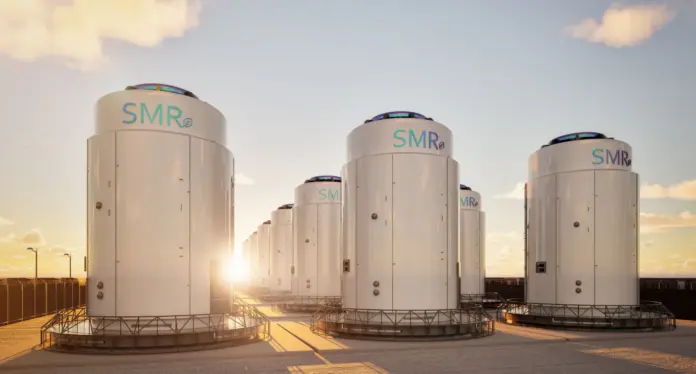
On 22 October 2026, Orlen and Synthos Green Energy (SGE) agreed on the framework for developing small modular reactors (SMRs) using BWRX-300 technology in Poland. Orlen will lead the Włocławek project, while SGE will lead the investment in Stawy Monowskie. The first BWRX-300 unit in Włocławek is expected to become operational in the mid-2030s. The agreement clarifies project responsibilities, financing and governance arrangements, but construction has not yet begun.
Small modular reactors in Poland are expected to provide a reliable source of electricity for major industrial facilities. The agreement between Orlen, Synthos Green Energy and their joint venture, Orlen Synthos Green Energy (OSGE), brings the programme closer to implementation. For energy-intensive businesses, the key development is a clearer allocation of investment responsibilities and the introduction of financing arrangements for subsequent project phases.
What have Orlen and Synthos Green Energy agreed on regarding SMR development in Poland?
The framework agreement signed on 22 October 2026 establishes the principles for cooperation on BWRX-300 reactor projects. It covers project ownership structures, investment governance and the involvement of Orlen’s teams in projects managed by OSGE.
The most significant development is the designation of lead investors for two locations:
- Włocławek – Orlen will oversee the investment through its controlled special-purpose vehicle, BWRX-300 Włocławek sp. z o.o.
- Stawy Monowskie, near Oświęcim – Synthos Green Energy, owned by Michał Sołowow, will act as the lead investor.
The Włocławek project will follow a phased development model. Each phase will have a defined budget, timetable and scope of work, with financing for subsequent stages dependent on the achievement of earlier project milestones.
Włocławek SMR project · Poland
How the Włocławek SMR project is planned to be developed and financed
The Włocławek project will follow a phased development model, with Orlen overseeing the investment through its controlled special-purpose vehicle.
01
Each project phase
Each phase is to have a defined budget, timetable and scope of work.
Earlier project milestones achieved
02
Subsequent stages
Financing for subsequent stages depends on the achievement of earlier project milestones.
Investment vehicle
BWRX-300 Włocławek sp. z o.o.
Orlen’s controlled special-purpose vehicle, through which Orlen will oversee the Włocławek investment.
Technology licensing · expected
Direct licensing rights
Orlen is expected to obtain direct licensing rights to the BWRX-300 technology — important for maintaining project control and reducing organisational dependence on its partners.
Source: Orlen–SGE framework agreement of 22 October 2026 — as reported in the article.
Orlen is also expected to obtain direct licensing rights to the BWRX-300 technology. This is important for maintaining project control and reducing organisational dependence on its partners.
The parties intend to supplement the framework agreement with detailed implementation agreements before the end of 2026.
Where will Poland’s first small modular reactors be built?
The first project identified for development is the SMR power plant in Włocławek. A second investment, based on a similar cooperation model, is planned for Stawy Monowskie in the Lesser Poland Voivodeship.
| Location | Lead investor | Status and development plan |
| Włocławek | Orlen | Phased development, with the first reactor unit expected to become operational in the mid-2030s |
| Stawy Monowskie | Synthos Green Energy | Cooperation framework agreed; no commissioning date announced |
OSGE holds decisions-in-principle covering a total of 24 nuclear reactor units across six locations in Poland. However, these decisions do not mean that all the projects have secured construction permits or financing.
Orlen’s strategy envisages commissioning at least two SMR units by 2035. These reactors are intended to provide a stable electricity supply for the group’s industrial facilities in Płock and Włocławek.
What is the BWRX-300 reactor and why does it matter for Polish industry?
The BWRX-300 is a small modular nuclear reactor with an electrical capacity of approximately 300 MWe, developed by GE Vernova Hitachi Nuclear Energy. It uses boiling water reactor technology and is designed to generate electricity independently of weather conditions.
Unlike wind and solar power installations, a nuclear reactor can operate continuously, subject to scheduled maintenance and refuelling outages.
For industrial businesses, this offers the potential to improve access to a reliable electricity supply, particularly in sectors where production facilities need to operate around the clock.
BWRX-300 technology is already being developed outside Poland. The first reactor of this type is under construction in Canada, while a construction permit has also been issued in the United States for a unit using the same technology. These international projects could provide valuable technical and organisational experience for Poland’s planned investments. However, they do not remove the need to complete Polish nuclear safety procedures and obtain the necessary regulatory approvals.
When will construction of the Włocławek SMR power plant begin?
No official start date for the main construction works has yet been announced. However, according to OSGE, the first BWRX-300 unit in Włocławek is expected to become operational in the mid-2030s. Meeting this target will depend on completing the preparatory work and obtaining the required regulatory decisions.
SMR project in Włocławek, Poland · Timeline
Włocławek SMR: agreed, intended, planned and expected
Orlen will lead the Włocławek project, the first SMR power plant identified for development in Poland. No official start date for the main construction works has yet been announced.
Done · 22 October 2026
Framework agreement signed
Orlen and Synthos Green Energy agreed on the framework for developing small modular reactors using BWRX-300 technology in Poland.
Intended · before the end of 2026
Detailed implementation agreements
The parties intend to supplement the framework agreement with detailed implementation agreements.
NEXT PREPARATORY AND REGULATORY STEPS
Preparatory work and regulatory steps
Commencing environmental and site assessment studies
Developing an investment support framework in cooperation with Poland’s Ministry of Energy
Preparing and submitting a construction licence application to the National Atomic Energy Agency (PAA)
Agreeing detailed implementation and financing arrangements through project-specific agreements
Expected · mid-2030s
First BWRX-300 unit in Włocławek operational
According to OSGE. Meeting this target will depend on completing the preparatory work and obtaining the required regulatory decisions.
Orlen’s strategy envisages commissioning at least two SMR units by 2035, to provide a stable electricity supply for the group’s industrial facilities in Płock and Włocławek.
Source: Orlen–SGE framework agreement of 22 October 2026; OSGE; Orlen strategy — as reported in the article.
The next stages include:
- Commencing environmental and site assessment studies.
- Developing an investment support framework in cooperation with Poland’s Ministry of Energy.
- Preparing and submitting an application for a construction licence to the National Atomic Energy Agency (PAA).
- Agreeing on detailed implementation and financing arrangements through project-specific agreements.
The economic viability of the investment remains a major consideration. The announcement of 22 October did not provide a final cost estimate for the Włocławek power plant or a projected price for the electricity it will generate. It is therefore not yet possible to determine whether electricity from the planned reactors will be cheaper than alternative energy sources available to Polish industry.
What could small modular reactor development mean for investors in Poland?
The development of SMRs could influence the operating environment for industrial businesses in Poland over the longer term. The potential impact is particularly relevant to sectors where electricity accounts for a significant proportion of operating costs, including chemicals, petrochemicals, steelmaking and industrial materials manufacturing.
Three considerations are particularly important for foreign investors.
First, security of energy supply. Nuclear reactors could eventually increase the availability of reliable electricity generation, reducing industry’s dependence on fossil fuels.
Second, cost predictability. Nuclear power could increase the share of stable generation sources in Poland’s energy mix. However, the actual cost of electricity for industrial consumers will depend on factors including construction expenditure, financing costs, operating expenses and the investment support model adopted.
Third, opportunities for suppliers. The preparation and construction of nuclear power plants could generate demand for engineering, construction and logistics services, as well as specialised components. However, businesses seeking to participate in the nuclear supply chain will need to meet the relevant quality standards and industry-specific requirements.
Will the Orlen–SGE agreement accelerate nuclear energy development in Poland?
The agreement reduces some of the uncertainty surrounding the division of responsibilities between the partners and establishes a framework for managing the two SMR projects. This represents an important organisational milestone that could facilitate subsequent investment decisions.
Orlen–SGE agreement · SMRs in Poland
What the agreement settles — and what it leaves open
The framework agreement of 22 October 2026 is an important organisational milestone. It does not establish a definitive construction timetable or confirm the economic viability of the projects.
Established
What the framework agreement covers
Lead investors designated: Orlen for Włocławek, Synthos Green Energy for Stawy Monowskie
Principles for project ownership structures and investment governance
Involvement of Orlen’s teams in projects managed by OSGE
Financing arrangements for subsequent project phases
Not yet established
What the announcement did not provide
A definitive construction timetable — construction has not yet begun
A final cost estimate for the Włocławek power plant
A projected price for the electricity the reactors will generate
Confirmation of the projects’ economic viability
24 reactor units · six locations
OSGE holds decisions-in-principle covering a total of 24 nuclear reactor units across six locations in Poland. These decisions do not mean that all the projects have secured construction permits or financing.
Key developments to watch in the coming months
Signing of implementation agreements
Progress on site assessments
Agreement on the financing model
Source: Orlen–SGE framework agreement of 22 October 2026 and OSGE — as reported in the article.
However, it does not establish a definitive construction timetable or confirm the economic viability of the projects. The key developments to watch over the coming months will be the signing of implementation agreements, progress on site assessments and agreement on the financing model. If the announced schedules are met, small modular reactors could become one of the electricity sources supporting Polish industry over the next decade. For businesses and investors, this is another factor worth incorporating into long-term industrial location assessments.
SUCCESSFUL INVESTING IN POLAND – NEWSLETTER
Looking for new business opportunities in Poland? Get key updates on investments, the economy and market trends — straight to your inbox.
SUBSCRIBE TO THE NEWSLETTER