






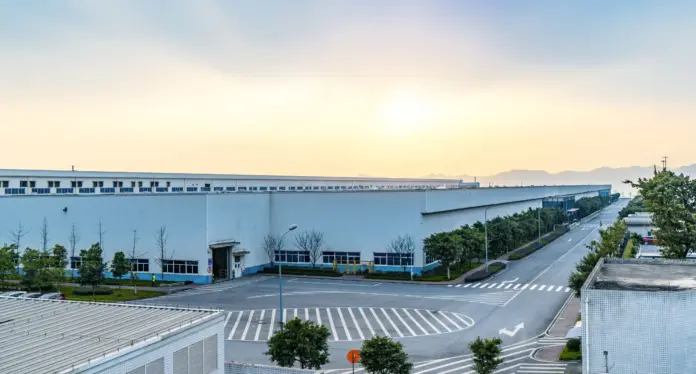
The planned technology park near Wrocław is one of the most significant investment announcements in Poland in recent months. Taiwanese companies associated with the Taiwan Electrical and Electronic Manufacturers’ Association (TEEMA) intend to develop the project in the municipality of Miękinia in Lower Silesia. The site had previously been prepared for Intel’s planned investment and is now being indicated as a potential location for a major new technology hub focused on component manufacturing, artificial intelligence solutions and electromobility.
The announcement was made during Taiwan Expo 2026 in Warsaw. From the perspective of foreign investors, this is a signal that goes beyond a single location. The project shows that Poland is increasingly being perceived not only as a manufacturing market, but also as a place for the development of advanced industrial sectors, high-tech supply chains and research and development cooperation.
What is TEEMA and why does its decision matter for Poland?
TEEMA is one of Taiwan’s most important business organisations. It brings together thousands of companies operating in the electrical, electronics and technology sectors. In practice, this means access to an ecosystem of enterprises involved in electronics manufacturing, components, IT solutions, automation, servers, the semiconductor industry and technologies used in electromobility.
For Poland, TEEMA’s decision is strategically important for several reasons. Firstly, Taiwan is one of the world’s key electronics manufacturing hubs and a crucial player in global semiconductor supply chains. Secondly, Taiwanese companies are strongly connected with international supply chains serving the world’s largest technology corporations. Thirdly, the investment near Wrocław may help Poland move higher up the value chain in the technology industry.
This is therefore not only about building another manufacturing facility. The more important aspect is the potential to create an environment in which industrial companies, component suppliers, engineering centres, universities, local governments and investor support institutions can cooperate.
Who
Taiwanese companies associated with TEEMA — the Taiwan Electrical and Electronic Manufacturers’ Association
Where
Municipality of Miękinia, Lower Silesia — a site previously prepared for Intel’s planned investment
Announced
Unveiled during Taiwan Expo 2026 in Warsaw
Focus
Component manufacturing, artificial intelligence solutions and electromobility
Status
Still at the planning and preparation stage — scale, timetable and participating companies are yet to be confirmed.
Why was Miękinia near Wrocław chosen?
The choice of Miękinia is not accidental. Investment areas in this part of Lower Silesia had already been prepared for a large industrial project. Intel previously planned to build a semiconductor integration and testing facility there. Although the American company ultimately withdrew from the project, the infrastructure, site potential and involvement of public institutions remain important advantages of the location.
For a technology investor, operating costs are not the only factor. Access to energy, technical infrastructure, transport connections, expansion potential, the pace of administrative procedures and availability of skilled workers are also crucial. The Wrocław metropolitan area combines many of these elements.
Wrocław is one of Poland’s largest academic and technology centres. The region is home to many companies from the IT, industrial manufacturing, automation, business services and engineering sectors. Lower Silesia also has experience in handling large foreign investment projects. For Taiwanese companies, this may mean easier access to the European market and to the competences required for the development of modern production.
AI, servers and electromobility as key development areas
Key Development Areas
01
AI servers
Production of servers for artificial intelligence. AI is driving demand for computing infrastructure, data centres, advanced servers, cooling systems and specialised components.
02
Electromobility
Components for electric vehicles. Electromobility creates demand for batteries, power electronics, energy management systems and solutions for intelligent transport.
03
Electronics & semiconductors
Components, integration, testing and servers. Even without full-scale manufacturing, these segments could move Poland higher up the technology value chain.
According to the announcements, the planned technology park is expected to include projects related, among other things, to the production of servers for artificial intelligence and components for electric vehicles. This is particularly important because both sectors are currently among the fastest-growing areas of the global economy.
The development of artificial intelligence is increasing demand for computing infrastructure, data centres, advanced servers, cooling systems, electronic circuits and specialised components. Electromobility, in turn, creates demand for batteries, power electronics, energy management systems, vehicle components and solutions for intelligent transport.
Poland already plays an important role in the European automotive industry, battery production and modern technology services. The entry of Taiwanese companies could strengthen this ecosystem and increase Poland’s participation in more advanced manufacturing segments.
For foreign investors, this is an important signal. Poland no longer competes only on labour costs. Technical competences, location within the European Union, access to the European market, industrial infrastructure and the ability to build regional supply chains are becoming increasingly important.
What could this investment mean for Lower Silesia?
The TEEMA technology park may become a major development impulse for the whole of Lower Silesia. The direct effect could be new jobs, especially for engineers, IT specialists, automation experts, logistics professionals, production managers and quality experts. However, the broader economic impact may be much wider.
Large technology investments usually attract suppliers, subcontractors, service companies, logistics operators, design firms, construction contractors and training institutions. They may also strengthen cooperation with universities and technical schools, as investors need stable access to qualified employees.
For local companies, this creates an opportunity to enter new supply chains. Not every company needs to supply the most advanced electronic components. Maintenance services, logistics, industrial automation, material processing, packaging, technical safety, legal support, accounting, payroll and advisory services are often equally important.
From the regional perspective, the project may also strengthen Lower Silesia’s brand as a location for the industries of the future. Wrocław and its surrounding areas have been attracting technology, services and industrial investments for years. The TEEMA project could deepen this trend.
Poland as part of Europe’s high-tech supply chain
One of the most important aspects of this investment is its potential impact on Poland’s position in European supply chains. The pandemic, geopolitical tensions and the growing importance of technological security have encouraged companies to look for locations closer to their main sales markets.
Poland may benefit from this trend. It is a member of the European Union, has a large domestic market, a developed industrial base and a favourable location between Western, Central and Eastern Europe. For investors from Asia, this means the possibility of serving European customers from a location inside the EU single market.
The technology park near Wrocław may become part of this process. If the project is implemented in line with the announcements, Poland could strengthen its role in sectors such as electronics, components for electromobility, AI infrastructure and the semiconductor industry. Even if this does not involve full-scale semiconductor manufacturing in the strictest sense, the development of components, integration, testing, servers and related solutions may have significant economic importance.
It is also worth monitoring links with other Taiwanese projects in Poland, including plans related to electromobility. If several initiatives develop in parallel, a stronger Polish-Taiwanese cooperation ecosystem may emerge.
Why is this investment important for foreign companies planning to enter Poland?
For foreign entrepreneurs interested in Poland, the TEEMA project is an important market signal. Large technology investments rarely appear in random locations. Their location is selected after an analysis of infrastructure, costs, competences, risks, administrative support and development potential.
If Taiwanese companies have identified Lower Silesia as an attractive location, this may strengthen the confidence of other investors in Poland. This applies especially to companies from manufacturing, technology, logistics and research and development sectors.
A foreign investor analysing entry into the Polish market should pay attention to several practical conclusions:
- the importance of well-prepared investment sites,
- the role of cooperation with local and central public institutions,
- access to technical and engineering talent,
- the possibility of using an existing supplier ecosystem,
- the importance of special economic zones and regional support instruments,
- the need for efficient handling of administrative procedures in Poland.
The project also shows that Poland is actively seeking high-value investments. Business missions, intergovernmental talks, activities of the Polish Investment and Trade Agency, special economic zones and local governments may have a real impact on attracting large projects.
Opportunities and risks related to the TEEMA project
Two Sides of the Project
Main Opportunities
✓
Attracting foreign capital from the high-tech sector
✓
Creating new jobs for specialists
✓
Developing industrial and engineering competences
✓
Strengthening cooperation between Poland and Taiwan
✓
Supporting local suppliers and industrial services
✓
Increasing Poland’s visibility as a technology investment location
Main Risks
–
Implementation time
–
Availability of workers
–
Energy costs
–
Administrative procedures
–
Competition from other countries
–
Volatility in the global technology market
Although the investment announcement is highly significant, it should be remembered that the project is still at the planning and preparation stage. The next key decisions will concern the scale of investment, timetable, list of participating companies, production scope and cooperation model with Polish institutions.
The main opportunities include:
- attracting foreign capital from the high-tech sector,
- creating new jobs for specialists,
- developing industrial and engineering competences,
- strengthening cooperation between Poland and Taiwan,
- supporting local suppliers and industrial services,
- increasing Poland’s visibility as a technology investment location.
The main risks concern implementation time, availability of workers, energy costs, administrative procedures, competition from other countries and volatility in the global technology market. Investments of this type are capital-intensive and depend on decisions made by many entities. Therefore, it will be important to move efficiently from declarations to specific stages of implementation.
What should investors monitor in the coming months?
For entrepreneurs and investors interested in the project, the most important information will concern the timetable, investment value, participating companies and the scope of planned production. It will also be important to see whether the technology park near Wrocław attracts local suppliers and partners from Poland.
It is also worth following the development of cooperation between Poland and Taiwan in semiconductors, AI, electromobility and electronics. These are sectors that may determine industrial competitiveness in the coming years.
For companies planning expansion into Poland, the TEEMA case may serve as a useful illustration of how important it is to combine location, infrastructure, institutional support and regional competences. Poland has more and more arguments to attract technology investments, but the final success will depend on efficient implementation, access to talent and the ability to build sustainable business ecosystems.
More analyses on investing, the economy and technological development in Poland are available in our newsletter: https://successful-investing-in-poland.com/polish-newsletter/subscribe/.
SUCCESSFUL INVESTING IN POLAND – NEWSLETTER
Looking for new business opportunities in Poland? Get key updates on investments, the economy and market trends — straight to your inbox.
SUBSCRIBE TO THE NEWSLETTER