






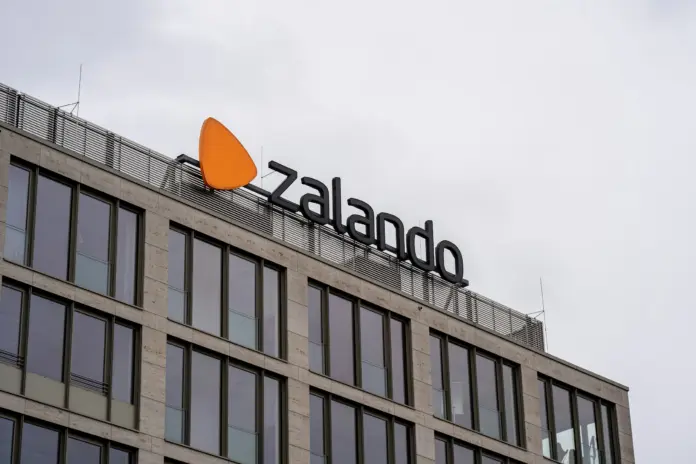
Zalando is closing one of its most important logistics centres in Germany. Its Erfurt fulfilment centre was scheduled to cease operations by the end of September 2026, as part of a broader integration of the Zalando and ABOUT YOU logistics networks.
For Polish brands selling into the German market, however, the more important question is not the warehouse closure itself, but where their products will actually be dispatched from following the reorganisation.
It is the physical movement of goods, rather than the name of the marketplace or warehouse, that is fundamental to determining the correct VAT treatment.
If a parcel continues to be shipped from Poland to a customer in Berlin, Munich or Hamburg, the Zalando network reorganisation does not, in itself, change the applicable VAT rules. However, if a Polish seller’s own inventory is stored in Germany or transferred to another EU country, the tax implications may be very different.
What exactly is changing with the closure of Zalando’s Erfurt fulfilment centre?
On 8 January 2026, Zalando announced a restructuring of its European logistics network. One of the most significant measures was the planned closure of its Erfurt fulfilment centre by the end of September.
For more than a decade, the facility had been an important part of Zalando’s German logistics infrastructure, employing approximately 2,700 people.
However, the restructuring extends beyond a single warehouse.
Zalando also announced plans to discontinue operations at three fulfilment centres outside Germany operated by third-party providers. Following the reorganisation, the group is expected to operate 14 fulfilment centres across seven countries.
The company has linked these changes to the integration of Zalando’s and ABOUT YOU’s logistics networks. The objective is to enable more flexible inventory allocation and establish a model capable of fulfilling orders more consistently across the combined infrastructure.
By late August 2026, parcels were no longer being dispatched to customers from Erfurt, and inventory was being transferred to other locations. This does not, however, establish with certainty that the entire formal closure process had been completed.
For Zalando partners, another issue is more important.
Publicly available information does not identify the specific fulfilment centres to which individual sellers’ inventory will be transferred or the warehouses from which particular German customer orders will be fulfilled after the restructuring.
This is where the most important part of the analysis begins.
Will Polish Zalando sellers experience changes to deliveries in Germany?
There is no single answer that applies to every seller.
The impact of the reorganisation depends primarily on the logistics model used by each brand.
| Sales model | Potential impact on deliveries to Germany | What to check for VAT purposes |
| Direct shipping from Poland to German consumers | The Erfurt closure does not automatically change the dispatch location. Any impact on delivery times should be assessed using actual carrier and order data. | Intra-Community distance sales of goods from Poland to Germany generally remain the relevant VAT category. |
| ZFS – seller-owned inventory stored within Zalando’s network | The key considerations are the country in which inventory is held after the reorganisation and the dispatch location of each order. | Identify the country where the seller’s own goods are stored and where each shipment begins. |
| Seller-owned inventory transferred between EU countries | Shipping routes and delivery times may change. However, Zalando’s announcement does not confirm such transfers for any particular partner. | Assess transfers of the seller’s own inventory separately from subsequent sales to consumers. |
In practice, a Polish company fulfilling orders independently from its warehouse in Poland may experience no change at all from a VAT perspective.
Businesses using Zalando Fulfilment Solutions (ZFS), however, should pay considerably closer attention to the reorganisation.
Why is inventory location so important under ZFS?
Under the ZFS model, a partner places its own goods within Zalando’s logistics network, while the platform handles activities including storage, order picking and packing, shipping and returns management.
However, there is one important detail that can easily be overlooked.
Goods stored through ZFS remain the property of the partner.
Placing products in a Zalando warehouse therefore does not mean that the platform has purchased them from the Polish brand or assumed all associated VAT obligations.
For example, if a Polish company owns clothing stored in a German fulfilment centre, the fact that Zalando physically handles the parcel does not automatically mean the sale should be treated in the same way as a shipment originating in Poland.
It is necessary to establish where the goods were located before the sale and where their transport to the customer began.
Does Zalando account for VAT because the sale takes place through its marketplace?
This should not be assumed automatically.
EU VAT rules do provide for situations in which an electronic interface, such as a marketplace, is treated as having received and supplied the goods itself. This is known as the deemed supplier mechanism.
However, it applies only in specific circumstances.
One such situation arises when a platform facilitates the supply of goods already located within the EU, but the seller is a business not established in the European Union. Separate rules also apply to distance sales of imported goods in consignments of a specified value.
For a typical Polish seller, the position is different.
Where a Polish seller, as an EU-established business, sells its own goods already located within the EU, Zalando does not generally become the supplier for VAT purposes simply because the transaction takes place through its marketplace.
If Zalando is not acting as the deemed supplier in a particular transaction, responsibility for correctly accounting for local VAT remains with the partner.
This is particularly important when using ZFS.
A marketplace may process payments, manage orders, handle logistics and arrange product returns, but this does not automatically mean that the platform assumes all the tax obligations of the goods’ owner.
How should VAT be accounted for when selling from Poland to customers in Germany?
The simplest approach is not to begin the analysis by asking:
“Did I sell through Zalando?”
A much more useful question is:
Where exactly did the goods begin their journey to the individual customer?
If a Polish company ships a product directly from its warehouse in Poland to a consumer in Germany, the transaction will generally constitute an intra-Community distance sale of goods.
Under the general rule, the place of taxation is the country in which transport ends.
For a shipment following the route:
Poland → Germany
that country will therefore be Germany.
The seller may account for such sales through the EU One Stop Shop (OSS) scheme in Poland, rather than registering and reporting each qualifying consumer sale separately in the country of consumption.
What does the EUR 10,000 threshold mean for intra-Community distance sales?
For intra-Community distance sales, businesses must consider the EU-wide threshold of EUR 10,000, equivalent to PLN 42,000 under Polish legislation.
However, this is not a separate threshold for Germany.
It covers qualifying intra-Community distance sales of goods together with certain cross-border telecommunications, broadcasting and electronic services supplied to consumers.
Both the current and previous calendar years must be taken into account when applying the threshold.
Equally importantly, it is not an unconditional exemption allowing every seller to account for VAT in its home country until sales exceed EUR 10,000.
Specific conditions must be met for the rule to apply.
For a Polish business, one of these conditions is that the qualifying goods must be dispatched from Poland, the Member State in which the business is established.
This distinction is particularly important when using warehouses located abroad.
What happens if the seller’s own goods are already stored in Germany?
In this situation, the VAT treatment is different.
Consider a Polish brand whose own inventory is held in a German warehouse operated under the ZFS model.
A German customer places an order, and the parcel is dispatched from a warehouse in Germany to a destination within Germany.
The shipping route is therefore:
Germany → Germany
This is not an intra-Community distance sale from Poland to Germany.
As a general rule, it is a domestic sale within Germany.
The EU OSS scheme used by a Polish business is not normally intended for reporting such domestic sales of its own goods in Germany.
Under a typical ZFS arrangement involving seller-owned inventory stored in Germany, local German VAT registration will generally be required.
This is not merely a matter of VAT theory.
Zalando requires ZFS partners to hold a valid VAT number for the countries in which their goods may be stored. As the main ZFS fulfilment centres include locations in Germany, using German-based inventory also involves a requirement to hold a German VAT number.
A partner holding its own goods in a Zalando warehouse in Germany should therefore ensure that this requirement has been addressed before analysing individual orders.
Does transferring inventory from Erfurt to another German warehouse change the VAT treatment?
Not necessarily.
If a partner’s own inventory is moved from Erfurt to another fulfilment centre but remains within Germany, the physical warehouse location changes, but the VAT classification of subsequent sales may remain the same.
If a German customer continues to receive products dispatched from a German warehouse, the route remains essentially:
Germany → Germany
From a tax perspective, the transaction therefore continues to be assessed as a domestic German sale.
However, the inventory location records should be updated accordingly, and the business should check whether the reorganisation involved any other cross-border stock movements.
What if goods are transferred from Germany to a warehouse in another EU country?
This is one of the most important scenarios for sellers using European fulfilment networks to monitor.
Suppose a Polish brand’s own goods are stored in a warehouse in the Czech Republic, the Netherlands or another EU Member State and are subsequently shipped to a consumer in Germany.
Where transport begins in one EU Member State and ends with a consumer in another, the transaction will generally be assessed as an intra-Community distance sale of goods.
For example, the route:
Czech Republic → Germany
may qualify as an intra-Community distance sale taxable in Germany and reportable by the Polish business through OSS.
However, there is an important qualification.
If a Polish business is established in Poland but ships goods from a warehouse in the Czech Republic to a consumer in Germany, the EUR 10,000 threshold, equivalent to PLN 42,000, does not apply to that sale.
This is because the threshold applies to a specific sales model in which goods are dispatched from the Member State where the business is established.
A Polish company should therefore not assume that it can apply the PLN 42,000 threshold to shipments from the Czech Republic to Germany and only begin accounting for German VAT once that threshold has been exceeded.
At the same time, using a warehouse in the Czech Republic may itself create additional tax obligations in that country.
OSS simplifies the reporting of subsequent consumer sales, but it does not automatically eliminate obligations associated with holding the seller’s own inventory in another EU Member State.
What happens when a Polish seller transfers its own inventory from Poland to Germany?
This scenario is particularly important for brands beginning to use fulfilment services abroad.
Suppose a Polish company ships 1,000 units of its own products from a warehouse in Łódź to a logistics centre in Germany.
There is no specific German customer at this stage.
The goods are being transported to a warehouse and remain the property of the Polish company.
This movement should not be treated as 1,000 separate consumer sales or reported through OSS.
EU VAT rules provide separate treatment for transfers of a business’s own goods between Member States.
In a typical case, the process is as follows:
- Poland → seller-owned inventory in Germany
The transfer is generally treated as a deemed intra-Community supply of goods in Poland and a corresponding intra-Community acquisition of goods in Germany, subject to the exceptions provided for under the applicable legislation.
Subsequently:
- German warehouse → German consumer
This is a separate domestic sale in Germany.
Each stage must be assessed independently.
Under a typical arrangement:
Poland → seller-owned ZFS inventory in Germany → customer in Germany
local VAT registration in Germany is therefore generally required not because Zalando operates a marketplace, but because the Polish business owns and transfers goods to Germany and subsequently makes domestic sales there.
OSS cannot be used to account for the transfer of the seller’s own inventory itself.
Example: a Polish fashion brand sells through Zalando to a customer in Berlin
Suppose a Polish fashion brand operates a warehouse in Łódź and sells clothing to German customers through Zalando.
A German consumer orders a jacket. The product is packed in Łódź and shipped directly to Berlin.
The route is:
Łódź → Berlin
If the brand continues to dispatch the jacket from Łódź after the Zalando network reorganisation, the closure of the Erfurt facility does not, in itself, change the fundamental VAT classification of the transaction.
The sale still follows the route:
Poland → Germany
and therefore generally qualifies as an intra-Community distance sale of goods.
The position is different if the brand uses ZFS and has previously transferred its own jackets to a German warehouse.
First, there may have been a transfer:
Poland → seller-owned inventory in Germany
This constitutes one VAT-relevant event.
The German customer then purchases a jacket, which is shipped along the route:
German warehouse → Berlin
This is a second event, generally constituting a domestic German sale.
The fact that both stages take place within a single Zalando logistics model does not mean they can be combined into one transaction for VAT purposes.
Could Zalando deliveries to Germany take longer following the Erfurt reorganisation?
This cannot be determined from the restructuring announcement alone.
Zalando has stated that integrating the Zalando and ABOUT YOU infrastructure is intended to increase flexibility in inventory allocation, improve network utilisation and enable more versatile order fulfilment.
However, this does not automatically mean that parcels shipped by Polish partners will arrive faster or slower.
What matters is where the relevant inventory is located after the reorganisation and which fulfilment centre actually processes the order.
For a brand selling in Germany, its own operational data will therefore be considerably more useful than a general corporate announcement.
Relevant information includes inventory locations, stock movements, the fulfilment location of individual orders, the carrier used and actual delivery times.
Only on this basis can a business assess whether the reorganisation has affected service levels for German customers.
What should Polish sellers check following Zalando’s logistics reorganisation?
The priority is to connect logistics data with VAT reporting.
In practice, businesses should establish:
- Which country holds the seller-owned inventory used to fulfil orders for the German market.
- Where shipments for each significant category of orders actually originate.
- Whether the seller’s own goods have been transferred between EU Member States.
- Whether these transfers have been accounted for separately from subsequent consumer sales.
- Whether a particular transaction constitutes an intra-Community distance sale or a domestic sale in Germany.
- Whether the EUR 10,000 / PLN 42,000 threshold can apply to the specific shipping route.
- Whether the business holds the VAT registrations required in the countries where its own goods are stored.
- Whether Zalando acts as the deemed supplier in the relevant transaction or whether VAT responsibility remains with the partner.
The Erfurt reorganisation is primarily a reason to review the physical movement of inventory
For a Polish seller, the biggest mistake would be to make the following assumption:
“Zalando is closing a warehouse in Germany, so my VAT treatment must change.”
Nothing may change at all.
Alternatively, the implications could be substantial.
It all depends on where the seller’s own goods were stored, whether they were transferred between countries and where their journey to the individual consumer began.
If a Polish brand continues to ship products directly from Poland to German customers, the Erfurt reorganisation does not, in itself, change the nature of those transactions.
However, if seller-owned inventory is stored within the European ZFS network, stock location becomes one of the most important factors in determining the applicable VAT treatment.
Goods stored in Germany may result in domestic German sales.
Goods stored in the Czech Republic and shipped to Germany may qualify as intra-Community distance sales reportable through OSS, but without the Polish business being able to apply the PLN 42,000 threshold.
Transferring a company’s own products from Poland to a foreign logistics centre is a separate VAT-relevant event and should not be combined with a subsequent consumer order.
In European e-commerce, the tax treatment of a transaction increasingly depends not on the company’s registered office or the marketplace’s brand, but on the physical movement of the goods involved.
The actual route taken by each product is what matters.
This is why, following the changes to Zalando’s logistics network, a Polish seller may find that the question:
“Where is my inventory actually stored, and where is the parcel dispatched from?”
is far more important than:
“Which marketplace did I use to sell the product?”
This article is for informational purposes only and does not constitute individual tax advice. Where a business stores its own goods in several EU Member States or uses international fulfilment networks, its VAT reporting model should be reviewed against the actual movement of goods and the specific sales arrangements involved.
 Source: This article was prepared by amavat®. amavat® supports Polish and international e-commerce sellers with accounting and automates the complex processes involved in comprehensive VAT compliance across Europe.
SUCCESSFUL INVESTING IN POLAND – NEWSLETTER
Looking for new business opportunities in Poland? Get key updates on investments, the economy and market trends — straight to your inbox.
SUBSCRIBE TO THE NEWSLETTER