






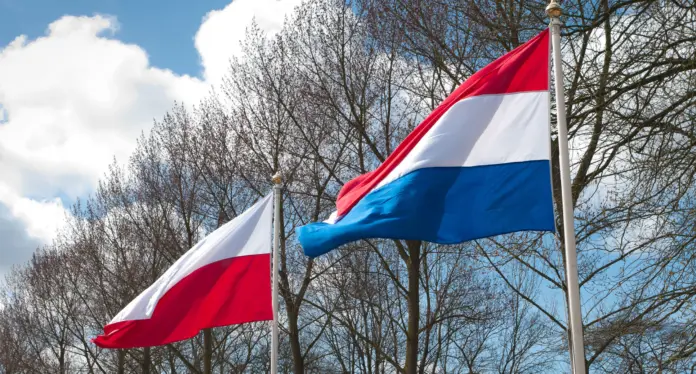
The minimum wage in Poland has been PLN 4,806 gross per month since 1 January 2026, while the indicative employer cost, assuming an accident insurance contribution of 1.67%, is approximately PLN 5,790.28 per month. In the Netherlands, the minimum wage for an employee aged 21 or over has been EUR 14.99 gross per hour since 1 July 2026.
Comparing the statutory rates alone does not, however, show the actual cost of employment. In the Netherlands, employers also need to factor in at least an 8% holiday allowance, employer contributions and potential obligations arising from collective labour agreements (CAO) and pension schemes. Under the model used in this article, assuming a 40-hour working week, the cost of employing a worker on the minimum wage is significantly higher in the Netherlands than in Poland. The precise difference depends on the circumstances of the individual employer.
The minimum wage in Poland and the Netherlands is one of the first benchmarks companies may consider when comparing the cost of building a team in the two countries. Gross pay alone, however, provides only part of the picture. The Polish and Dutch systems differ both in how the statutory minimum is determined and in the structure of additional employer-side costs.
For an entrepreneur or CFO, the more relevant question is therefore: what does it actually cost to employ one person in Poland and the Netherlands once mandatory employer charges are included? Below, we compare minimum pay, employer contributions, the Dutch holiday allowance and other elements that can affect the overall employment budget and the scope of payroll services in Poland required to administer employees. For comparison purposes, amounts in Polish zloty are converted into euros using the average exchange rate published by the National Bank of Poland (NBP) on 8 September 2026, at EUR 1 = PLN 4.3155.
If you are also considering other employment locations, see our comparisons of minimum wage in Poland and Germany in 2026 – employment cost comparison and minimum wage in Poland and the UK in 2026 – employment cost comparison.
Why is comparing the minimum wage in Poland and the Netherlands alone not enough?
Poland and the Netherlands use different methods for setting statutory minimum pay. In Poland, the main benchmark for a full-time employee is a monthly amount. In the Netherlands, a statutory minimum hourly wage has applied since 2024, meaning that monthly pay depends on the number of hours to be accounted for under the employment relationship.
The structure of employer costs also differs. In Poland, the main employer contributions can be estimated relatively easily as percentages of gross pay. In the Netherlands, some charges depend on the type of contract, the size of the employer and an individually or sectorally determined rate.
A company comparing employment costs in Poland and the Netherlands should therefore separate the analysis into three levels: the statutory minimum wage, mandatory employer costs calculated on remuneration, and costs arising from the specific sector and employment model.
What is the minimum wage in Poland in 2026?
From 1 January 2026, the minimum wage in Poland is PLN 4,806 gross (approx. EUR 1,113.66) per month. The minimum hourly rate applicable to certain civil law contracts is PLN 31.40 (approx. EUR 7.28). These amounts were established by the Regulation of the Council of Ministers of 11 September 2025, Journal of Laws of 2025, item 1242.
In addition to gross pay, the employer primarily finances the old-age pension contribution of 9.76%, disability pension contribution of 6.50%, the accident insurance contribution applicable to the individual payer, the Labour Fund contribution of 2.45% and the Guaranteed Employee Benefits Fund (FGŚP) contribution of 0.10%.
For gross pay of PLN 4,806 and an assumed accident insurance rate of 1.67%, the individual employer charges are approximately:
- employer old-age pension contribution – PLN 469.07,
- disability pension contribution – PLN 312.39,
- accident insurance contribution – PLN 80.26,
- Labour Fund – PLN 117.75,
- Guaranteed Employee Benefits Fund (FGŚP) – PLN 4.81.
This gives approximately PLN 984.28 (EUR 228.08) in employer-financed contributions, resulting in an indicative monthly employment cost of PLN 5,790.28 (EUR 1,341.74). The calculation does not include, among other items, the cost of Employee Capital Plans (PPK), additional employee benefits, workplace costs or other expenditure resulting from a particular employment arrangement.
Detailed information on employers’ obligations under Poland’s Employee Capital Plans (PPK), contribution calculation rules and key deadlines is available here: PPK Poland – employer obligations.
Employer contributions in Poland at the 2026 minimum wage
≈ 20.48%
OF GROSS PAY
Old-age pension — 9.76%
≈ PLN 469.07
Disability pension — 6.5%
≈ PLN 312.39
Labour Fund — 2.45%
≈ PLN 117.75
Accident insurance 1.67% (model assumption) + Guaranteed Employee Benefits Fund (FGŚP) 0.10%
≈ PLN 85.07 combined
What is the minimum wage in the Netherlands in 2026?
The current minimum wage in the Netherlands has been EUR 14.99 gross per hour since 1 July 2026 for employees aged 21 and over. During the first half of 2026, the rate was EUR 14.71.
From 1 July 2026, the rates for younger employees are:
- age 20 – EUR 11.99,
- age 19 – EUR 8.99,
- age 18 – EUR 7.50,
- age 17 – EUR 5.92,
- age 16 – EUR 5.17,
- age 15 – EUR 4.50 per hour.
Minimum wage systems in Poland and the Netherlands – 2026
Statutory minimum
PLN 4,806
gross per month, from 1 January 2026
- Nature of the rate
- Monthly
- Model working time
- Not applicable – statutory minimum is monthly
- Statutory holiday allowance
- No separate universal 8% allowance
Indicative employer cost
≈ PLN 5,790.28 (EUR 1,341.74) / month
Statutory minimum
€14.99
gross per hour, age 21+, from 1 July 2026
- Nature of the rate
- Hourly
- Model working time
- 173.33 h / month (40-hour week)
- Statutory holiday allowance
- At least 8% (vakantiegeld)
Indicative employer cost
≈ EUR 3,244.16 / month before Whk and any pension contributions
Does the Netherlands have a monthly minimum wage?
No. Since 1 January 2024, the statutory minimum wage in the Netherlands has been defined on an hourly basis. Monthly remuneration depends on the number of working hours arising from the relevant employment relationship.
A comparison with Poland therefore requires an assumed working-time model. For a 40-hour working week, the average number of hours per month is:
40 × 52 ÷ 12 = 173.33 hours.
At the current rate of EUR 14.99, this gives approximately:
EUR 14.99 × 173.33 = EUR 2,598.27 gross per month.
EUR 2,598.27 should not, however, be presented as the Dutch statutory monthly minimum wage. It is solely a conversion used for the purposes of this employment cost comparison.
How does the 8% holiday allowance affect employment costs in the Netherlands?
One important difference from the Polish model is the statutory Dutch holiday allowance. As a general rule, an employee is entitled to at least 8% of gross remuneration as holiday allowance, or vakantiegeld.
Using the model monthly base of EUR 2,598.27, the average amount is:
EUR 2,598.27 × 8% = EUR 207.86.
For annual employment cost budgeting, gross remuneration plus the averaged holiday allowance therefore amounts to approximately EUR 2,806.13 per month.
This is an important component of the calculation. Simply comparing PLN 4,806 with the converted value of the Dutch hourly minimum would omit a cost that forms a statutory part of employee remuneration in the Netherlands.
What employer contributions apply in the Netherlands in 2026?
Dutch employment costs are not based on one fixed percentage applicable to every employer. In 2026, key employer-side charges include AWf, Aof, Wko, the Zvw health insurance contribution and the differentiated Whk contribution.
| Employer charge | 2026 rate | What affects the amount |
| AWf – unemployment fund | 2.74% or 7.74% | type of contract; the low rate may apply, among other cases, to a written permanent contract that is not an on-call contract |
| Aof | 6.27% or 7.63% | employer size; the lower rate applies to small employers |
| Wko | 0.50% | statutory contribution connected with the childcare system |
| Zvw | 6.10% | employer contribution under the health insurance legislation |
| Whk | variable rate | depends on the employer or sector; includes WGA and ZW-flex components |
For Aof purposes in 2026, a small employer is an entity whose relevant contribution base for 2024 does not exceed EUR 1,082,500. The higher Aof rate applies to medium-sized and large employers.
AWf is also important. The low rate of 2.74% does not depend solely on salary level. As a general rule, it requires a written permanent employment contract that is not an on-call contract. In many other cases, the 7.74% rate applies.
What affects employer contributions in the Netherlands in 2026?
AWf — unemployment fund
2.74% / 7.74%
Low rate generally requires a written permanent contract that is not an on-call contract.
Aof
6.27% / 7.63%
Low rate applies to small employers — 2024 contribution base up to €1,082,500.
Wko + Zvw
0.50% + 6.10%
Fixed contributions for the childcare system and health insurance legislation.
Whk
0.76%–6.63%
For small employers, sectoral Whk rates range from 0.76% in insurance to 6.63% in temporary employment.
How much does an employee on the minimum wage cost in the Netherlands?
There is no single employer cost applicable to every company in the Netherlands. Assuming an employee aged 21+, a 40-hour working week, a small employer and the low AWf rate, the cost before the variable Whk contribution and any pension contributions is approximately EUR 3,244 per month.
The calculation is as follows:
1. Model gross monthly remuneration:
EUR 2,598.27
2. Averaged cost of the 8% holiday allowance:
EUR 207.86
3. Basis for annual cost budgeting:
EUR 2,806.13
4. Model basic employer charges:
AWf 2.74% + Aof 6.27% + Wko 0.50% + Zvw 6.10% = 15.61%
5. Charges calculated on EUR 2,806.13:
approximately EUR 438.04
6. Averaged cost before Whk:
approximately EUR 3,244.16 per month.
The Whk contribution must still be added to this amount. In the official table for 2026, sectoral Whk rates for small employers vary significantly – from 0.76% in the insurance sector to 6.63% in the temporary employment sector. It is therefore not a uniform contribution across the market.
If the 7.74% AWf rate applies instead of the low rate, this component alone increases the cost in our model by approximately EUR 140 per month before Whk. The structure of the employment contract can therefore have a noticeable impact on the employer’s budget.
How do minimum wage and employer costs compare in Poland and the Netherlands?
The following comparison is intended for business analysis and does not represent one universal employment cost for the Netherlands.
| Area | Poland | Netherlands |
| Statutory minimum | PLN 4,806 (EUR 1,113.66) gross per month from 1 January 2026 | EUR 14.99 gross/hour for employees aged 21+ from 1 July 2026 |
| Nature of the rate | monthly | hourly |
| Model number of hours | monthly remuneration | 173.33 hours/month assuming 40 hours/week |
| Model gross remuneration | PLN 4,806 | approx. EUR 2,598.27, or approx. PLN 11,212.83 |
| Statutory holiday allowance | no separate universal 8% allowance corresponding to the Dutch system | at least 8% |
| Basic employer charges in the model used | approx. 20.48% assuming an accident insurance rate of 1.67% | 15.61% + Whk for a small employer using the low AWf rate |
| Indicative monthly cost | approx. PLN 5,790.28 (EUR 1,341.74) | approx. EUR 3,244.16 + Whk, or approx. PLN 14,000.17 + Whk |
| Additional elements | including PPK and employee benefits | possible mandatory pension fund, CAO, sickness absence and reintegration costs |
*For the Netherlands, the table shows the averaged annual cost converted into a monthly figure. The calculation includes the 8% holiday allowance but excludes Whk, pension contributions, costs arising from a CAO, commercial insurance and other benefits. Currency conversion: average National Bank of Poland (NBP) exchange rate EUR 1 = PLN 4.3155 on 8 September 2026 *
Under this specific model, the direct employer cost in the Netherlands before Whk is approximately 2.4 times higher than the indicative employer cost of a worker on the minimum wage in Poland. This does not mean that the total cost of doing business or carrying out a particular business process is automatically 2.4 times higher. An investment decision also needs to consider market salaries for the relevant positions, productivity, workforce availability, location, employee turnover and organisational costs.
Why can actual employment costs in the Netherlands be higher?
Can a CAO set employment terms above the statutory minimum?
In the Netherlands, some companies are covered by a collective labour agreement – Collectieve Arbeidsovereenkomst (CAO). A CAO may determine, among other matters, remuneration, working time, allowances and pension rules.
If the applicable CAO provides for a higher pay rate than the statutory minimum, the employment budget should not be based solely on EUR 14.99 per hour. For an investor, this means that the relevant sector and the applicability of a CAO should be established before calculating the cost of a position.
Is there one uniform employer pension contribution in the Netherlands?
There is no single additional employer pension contribution in the Netherlands that can be applied to every employment relationship. In some sectors, participation in a sectoral pension fund is mandatory. An obligation may also arise from a CAO or from rules applicable to particular professions.
How does sickness absence affect employer costs in the Netherlands?
As a general rule, a Dutch employer is required to continue paying at least 70% of the employee’s most recently received remuneration together with the applicable holiday allowance for up to two years of sickness absence.
During the first year, if 70% of remuneration is below the minimum wage, the employer must top up the payment to the minimum wage level. This top-up requirement does not apply in the second year. The employer also has obligations relating to the employee’s reintegration.
This is not a fixed monthly contribution and is therefore not included in the basic calculation. From a CFO’s perspective, however, it is an important employment cost risk, particularly when budgeting for a larger workforce.
What does this comparison mean for a company planning to hire?
The main conclusion is not simply that one statutory rate is higher than the other. The mechanisms that increase employment costs above base pay are also different.
For a standard employment relationship in Poland, the starting point is relatively straightforward: monthly remuneration plus a set of employer-side contributions. In the Netherlands, before preparing a budget, the company needs to establish the number of working hours, contract type, employer size, applicable Whk rate and the potential application of a CAO and pension fund.
For a CFO or HR decision-maker, this means the comparison should focus on the full annual cost of one position, followed by the cost of the entire planned team. Only this type of model allows a business to assess how the location of employment affects its operating budget.
When can Poland be more cost-effective for employers?
At the statutory minimum wage levels applicable in 2026, the employment cost base is significantly lower in Poland than in the Netherlands. This difference may be particularly relevant when building larger operational, administrative or finance teams, as well as business process centres.
A company should, however, compare salaries that correspond to the positions it is actually recruiting for rather than assume that every employee will be hired at the statutory minimum. For specialist positions, market remuneration may be significantly higher in both countries.
What should a business check before choosing Poland or the Netherlands as an employment location?
Before deciding to build a team in Poland or the Netherlands, a business should prepare a calculation covering at least:
- the actual market salary for the specific position, rather than only the statutory minimum wage,
- all employer contributions and mandatory allowances,
- the contract type and working time, particularly in the Netherlands,
- the applicable CAO, pension fund and Whk rate for Dutch operations,
- the cost of sickness absence, benefits and HR/payroll administration,
- tax and social insurance obligations where an employee works cross-border.
This approach reduces the risk of making an investment decision based on two nominal wage rates even though the actual cost of a position consists of several independent layers of employer expenditure.
What do employers ask most often about minimum wage in Poland and the Netherlands?
Is the minimum wage in Poland lower than in the Netherlands?
Yes. When comparing a model full-time position, the baseline cost of employment at the statutory minimum wage is significantly lower in Poland in 2026. The Polish minimum wage is PLN 4,806 per month, while the Dutch rate has been EUR 14.99 per hour for employees aged 21+ since 1 July 2026.
What is the minimum wage in the Netherlands in 2026?
From 1 July 2026, an employee aged 21 or over is entitled to at least EUR 14.99 gross per hour. Between 1 January and 30 June, the rate was EUR 14.71. The Netherlands does not currently have one statutory monthly minimum wage.
Is an 8% holiday allowance added to the minimum wage in the Netherlands?
As a general rule, employees are entitled to a holiday allowance equal to at least 8% of gross remuneration. It is a separate employment cost that should be included when budgeting annual employment expenditure.
What is the employer cost at the minimum wage in Poland?
For gross remuneration of PLN 4,806 and an assumed accident insurance contribution of 1.67%, the indicative employer cost is approximately PLN 5,790.28 per month. The calculation does not include, among other items, PPK or additional benefits.
Do all employers in the Netherlands pay the same contribution rates?
No. The AWf rate depends, among other factors, on the type of employment contract, Aof depends on employer size, and Whk varies. The final contribution rate therefore needs to be determined for the specific company and employment model.
Does every employer in the Netherlands have to finance an additional employee pension?
There is no single mandatory supplementary pension scheme applying to all employers. An obligation may, however, arise from a sectoral pension fund, a CAO or regulations applicable to a particular profession.
What is the key conclusion for employers comparing Poland and the Netherlands?
Direct answer
In the 2026 model used, employing a worker on the minimum wage costs significantly less in Poland than in the Netherlands.
PLN 4,806
Poland’s gross minimum wage per month, from 1 January 2026 — model employer cost ≈ PLN 5,790.28, assuming a 1.67% accident insurance rate.
€14.99
Netherlands’ gross minimum wage per hour for employees aged 21+, from 1 July 2026 (€14.71 in the first half of 2026)
At least 8%
Statutory Dutch holiday allowance (vakantiegeld), generally calculated on gross remuneration
€3,244.16
Model Dutch employer cost per month, small employer, low AWf rate, before Whk and any pension contributions
2.4×
Under the model used, the direct Dutch employer cost before Whk and any pension contributions is about 2.4 times the indicative Polish cost.
Key takeaways
The two wage systems aren’t directly comparable
Poland uses a monthly statutory minimum; the Netherlands applies an hourly minimum linked to working hours.
Dutch employer costs depend on the employment model
Contract type, employer size, Whk, CAO and pension obligations can all affect the final employment budget.
Gross minimum wage doesn’t show the full cost
Employer contributions, holiday allowance and other obligations need to be included in the comparison.
Minimum wage isn’t a proxy for specialist salaries
Market remuneration for specific roles may be significantly higher than the statutory minimum in both countries.
The minimum wage in Poland and the Netherlands in 2026 differs not only in amount but also in the structure of the statutory system. In Poland, the statutory benchmark is PLN 4,806 gross per month, while in the Netherlands the rate has been EUR 14.99 per hour for employees aged 21 and over since 1 July.
Under the model calculation, the employer cost in Poland is approximately PLN 5,790 per month, while in the Netherlands, assuming a 40-hour working week, the basic averaged cost exceeds EUR 3,244 per month before Whk and any pension or CAO-related costs are added. For a business considering building or expanding a team in Poland, the appropriate starting point is therefore a full employment cost calculation combined with a payroll process organised in accordance with Polish requirements.
SUCCESSFUL INVESTING IN POLAND – NEWSLETTER
Looking for new business opportunities in Poland? Get key updates on investments, the economy and market trends — straight to your inbox.
SUBSCRIBE TO THE NEWSLETTER